
Making trial-to-paid conversion rates more meaningful with cohorts
Trial-to-paid conversion rate is a key metric for SaaS businesses, but traditional methods of calculation can sometimes obscure meaningful insights. By using cohorts, you can track conversions more effectively and understand how long it takes for users to upgrade to paid plans.
In this article, we’ll demonstrate how to use cohort analysis to compare short-term and long-term trial-to-paid conversion rates.
Before you begin
- Understand how ChartMogul calculates trial-to-paid conversion rates.
- Learn how to apply filters and segmentation in ChartMogul.
- Review the basics of cohort analysis.
How to Compare Short-Term and Long-Term Conversion Rates
- Open the Trial-to-Paid Conversion report in ChartMogul.
- Add a filter: set Trial to paid in days to less than 30.
- Add a second filter: set Trial to paid in days to greater than 90.
- Enable Compare to view both cohorts side by side.
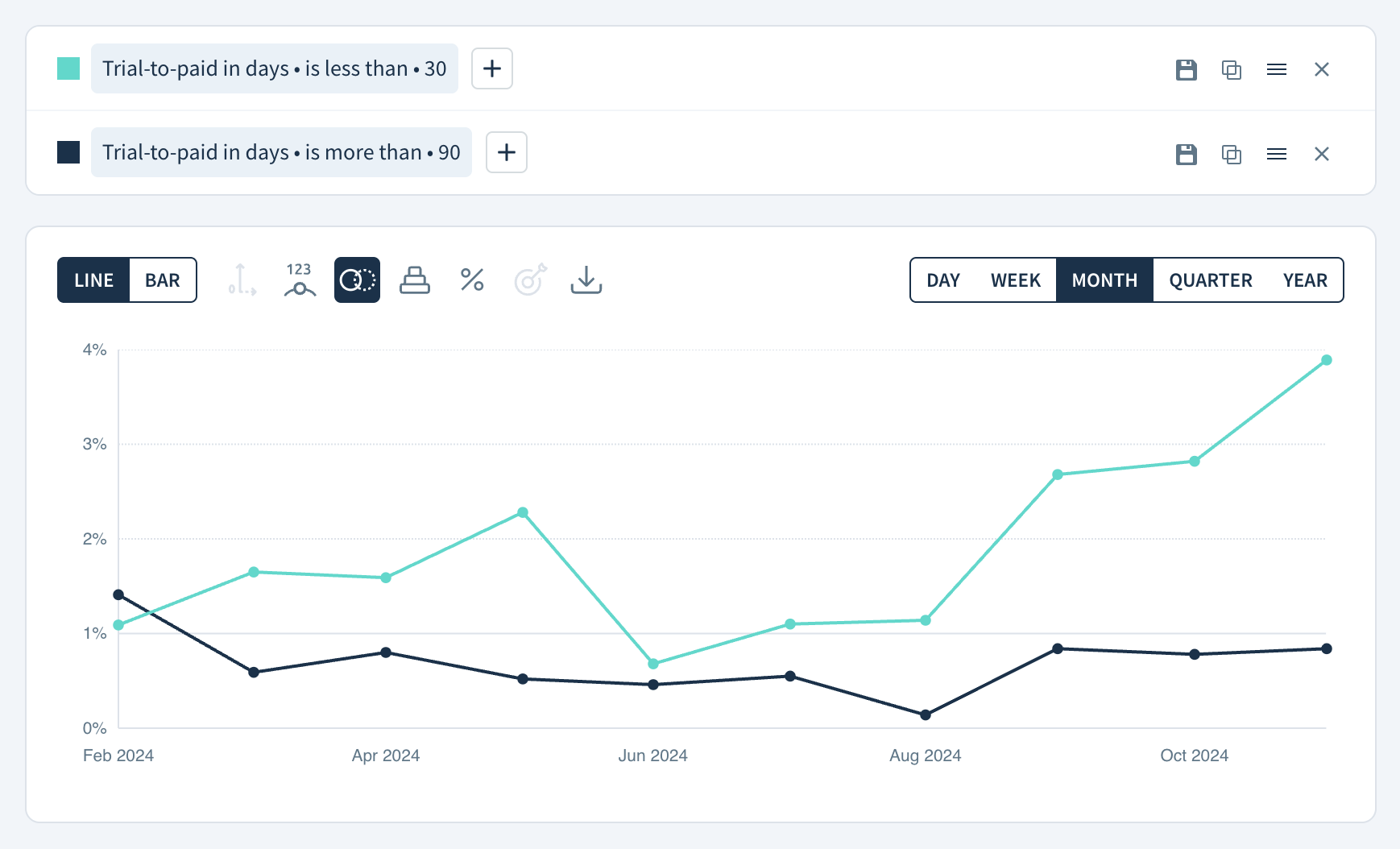
Your report should look like this example.
How to Read the Results
In this example, we can observe:
- Conversion speed varies: Some users convert within 30 days; others need more time.
- Delayed conversions are real: A meaningful share of users upgrade after the trial ends — post-trial engagement matters.
- Nurturing extends conversions: Follow-up campaigns and extended trials drive upgrades beyond the initial 30-day window.
What to Do Next
- Apply the same segments to the MRR Report to analyze revenue growth from trial conversions.
- Compare conversion rates by customer segment (e.g., small businesses vs. enterprises).
- Experiment with different trial lengths and assess the impact on conversion.
Share Your Findings
Have you discovered an interesting trend using trial-to-paid cohorts? Share your findings with us!